

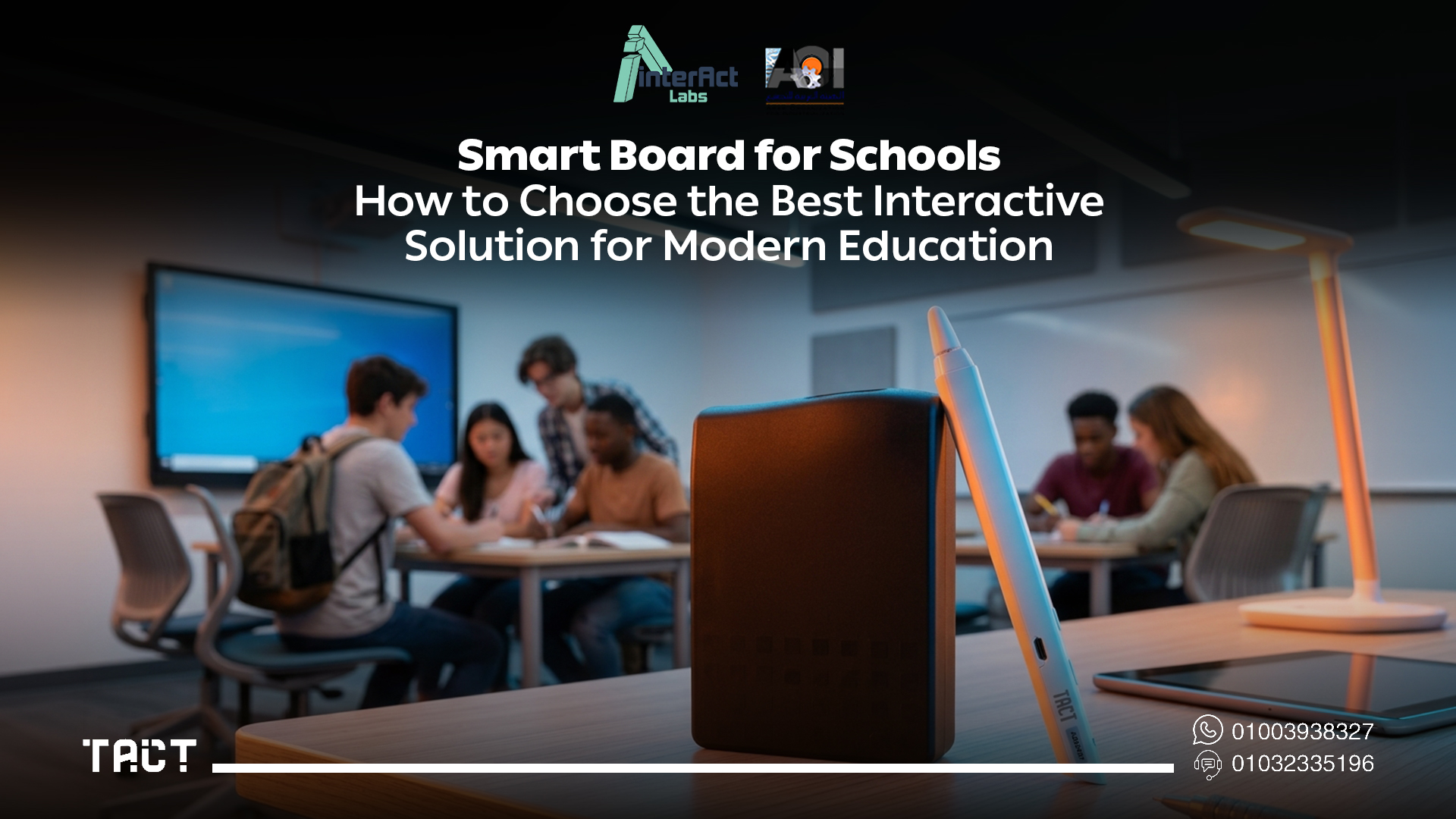
The decision to invest in a smart board for schools is rarely just a technology decision. For school directors, headmasters, and owners, it's a strategic commitment — one that shapes the learning experience across every classroom, affects how teachers teach, determines how students engage, and ultimately defines what kind of institution the school becomes over the next decade.
This guide is written for that level of decision-making. It covers the educational case for interactive classroom technology, how to evaluate the right solution for an institution's specific situation, how to think about the investment across the full school rather than room by room, and why the choice between solutions matters more than the technology itself.
Planning a school-wide technology investment? Visit Interact Labs and explore interactive solutions built for institutions at every scale.
What a Smart Board Actually Does for a School
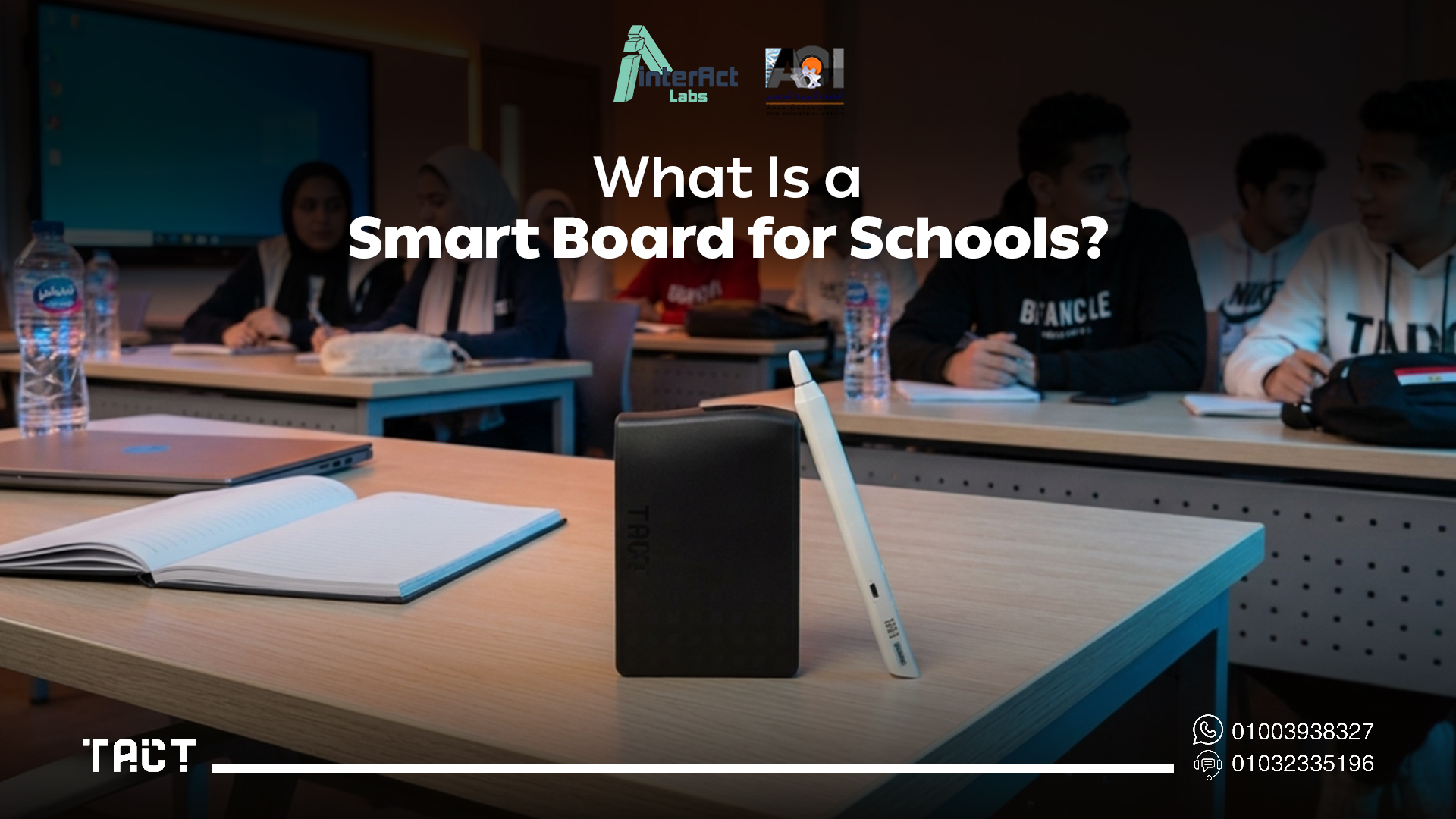
A smart board is an interactive digital teaching platform that combines touchscreen technology, multimedia capability, and computer connectivity into a single educational tool. Unlike a traditional whiteboard — which is a passive writing surface — a smart board turns the front of the classroom into a dynamic teaching environment where content responds to the teacher and the lesson actively involves students.
In practice, this means teachers can display presentations and write on them simultaneously, play educational videos and pause to annotate key moments, open and navigate educational software directly from the board, save everything written or annotated during a session and share it with students afterward, and invite students to come to the board and interact with the lesson content directly.
For students, the experience is fundamentally different from watching a teacher write on a whiteboard. They're engaged with content that responds, changes, and involves them — which research consistently links to higher attention, better retention, and stronger learning outcomes.
For a school as an institution, deploying this technology across all classrooms represents a measurable shift in educational quality — not a marginal improvement in one subject, but a transformation in how teaching happens across every discipline and every year group.
Why Schools Are Prioritizing Interactive Technology
The shift toward interactive classroom technology is driven by a convergence of educational, social, and competitive pressures that school leaders are navigating simultaneously.
Students have changed. Today's learners have grown up with touchscreens, instant feedback, and interactive media. Their baseline expectation for how information is presented and how they engage with it is fundamentally different from previous generations. Traditional one-way lecture delivery doesn't hold attention the same way it once did — not because students are less capable, but because their cognitive environment has shifted. Interactive classrooms meet students where they are rather than demanding they adapt to a teaching model designed for a different era.
Teaching quality is visible in outcomes. School reputations are built on results — exam performance, university placement, student satisfaction, parent confidence. Interactive technology consistently improves the quality of lesson delivery, the depth of student engagement, and the consistency of learning across a teaching staff of different experience levels. A school that invests in the infrastructure for great teaching creates conditions where good outcomes become more systematic rather than dependent on individual teacher brilliance.
Digital literacy is now a graduate requirement. Students who spend their school years in interactive, technology-rich learning environments develop digital collaboration skills, comfort with technology, and information literacy that matters in higher education and employment. Schools that provide this environment are preparing students for the world they'll actually enter.
Institutional positioning. For private schools and those operating in competitive enrollment environments, the quality of classroom technology is increasingly a factor in parental choice. Modern interactive classrooms signal investment in educational quality in a way that's immediately visible during school visits.
The Full Value of Smart Boards Beyond Classroom Engagement
The educational benefits of smart boards for schools extend beyond the lesson itself into school operations, teacher effectiveness, and long-term institutional development.
Teacher development and consistency. When teachers use shared digital lesson libraries, interactive tools, and annotation-based delivery, the gap between the most and least experienced teachers narrows. New teachers can build on existing lesson frameworks. Experienced teachers can develop more sophisticated interactive content. The school's overall teaching quality becomes more consistent and less dependent on which teacher a student happens to be assigned.
Reduced lesson preparation burden. Lessons built on digital platforms are saved, reusable, and updatable. A teacher who builds a strong interactive lesson on fractions in September can reuse it in March with revisions rather than starting from scratch. Over time, the school develops a curriculum resource library that benefits the entire teaching staff.
Parent and stakeholder confidence. Schools that can demonstrate modern, interactive classrooms during open days, parent evenings, and school visits communicate institutional seriousness about educational quality. This is increasingly a differentiating factor in competitive enrollment contexts.
Hybrid and extended learning. Lessons delivered through interactive platforms are naturally shareable. Students who miss sessions can access annotated lesson content. Students who need additional support can review material at their own pace. The learning experience extends beyond the classroom walls without requiring separate infrastructure.
Evaluating Interactive Solutions at the School Level
For school leaders evaluating a smart board investment, the evaluation framework needs to operate at the level of the whole institution, not individual classrooms.
Total deployment cost, not per-unit cost. A single interactive panel at a premium specification is one number. That same number multiplied by 20, 30, or 50 classrooms is the real investment. Understanding the total cost of comprehensive school-wide deployment — including installation, software, training, and ongoing maintenance — is the starting point for a realistic evaluation.
Existing infrastructure audit. Most schools have functioning display equipment — projectors, large-format TVs, or presentation screens — that represents prior investment. The question of whether to replace that equipment with new interactive panels or add interactive capability on top of it is not primarily a technology question. It's a resource allocation question. Replacing functioning equipment that has years of useful life remaining to gain interactive capability carries a cost that adding interactivity to existing equipment does not.
Teacher adoption, not just teacher training. Technology that teachers don't use consistently produces no educational benefit regardless of its specification. The best predictor of adoption is simplicity — systems where teachers are independently confident within a single orientation session see consistently higher daily usage than systems requiring extended training programs. For a school deploying across a large teaching staff, adoption rate is as important as capability specification.
Local support and continuity. A classroom display that goes offline during a critical exam preparation period is not just a technical problem — it's a teaching continuity problem. For schools in Egypt and the Gulf region, local support infrastructure determines how quickly issues are resolved. International brands routing support through regional distributors carry resolution timelines that can stretch into weeks. Local support with direct access to spare parts and on-site service is a continuity requirement, not a premium add-on.
Tact Panel: Interactive Display Built for Institutional Schools
For schools building new classrooms or replacing end-of-life display infrastructure, Tact Panel by Interact Labs is an interactive display designed specifically for institutional education environments — not repurposed from corporate meeting room hardware.
The specifications are built for the demands of school use. The display is available in sizes suited to different classroom depths, with 4K IPS panel technology that maintains clarity and color accuracy from all seating positions — including the back of a full classroom. Multi-touch support across the full display surface enables genuine collaborative interaction between students. Dual Android and Windows OS support means the panel operates independently for standard whiteboard and multimedia use, and connects to teacher laptops for the full range of educational software.
The build specification matters in a school context in ways that marketing materials often understate. Tact Panel's glass and touch layer are rated for the physical contact intensity of a school environment — students leaning on the surface, stylus pressure across hours of daily use, the general wear of a room that operates six to eight hours per day across an academic year. The anti-glare surface treatment is calibrated for classroom overhead lighting conditions, where glossy panels create significant visibility problems.
And for schools in Egypt and the Gulf region specifically: Interact Labs provides direct local technical support, local spare parts availability, and on-site service when required. This is a meaningfully different support model than purchasing a premium international panel through a regional distributor — and for school leaders responsible for classroom continuity, it's a decision that matters.
Browse Tact Panel configurations and sizes — and compare options for different classroom sizes and deployment scales.
Tact Device: School-Wide Interactive Deployment Without Replacing Existing Displays
For schools with functioning projectors, large-format TVs, or display screens that represent working prior investments, the Tact device by Interact Labs provides a path to school-wide interactive deployment at a per-room cost that makes comprehensive rollout achievable in a single budget cycle.
The Tact device adds interactive capability to whatever display is already in the room. Connect the classroom computer to the existing projector or TV, install the Tact software, position the device, complete a two-minute calibration, and the existing display becomes fully interactive. Teachers write directly on presentations, annotate lesson materials, draw diagrams, navigate applications, and save session content — all from the display surface.
For school leaders, the strategic relevance of this approach is straightforward: a budget that would fund interactive capability in five classrooms through full panel replacement can instead reach twenty or more classrooms through the Tact device conversion approach. The difference between five interactive classrooms and twenty is the difference between a pilot program and an institutional transformation.
The device is also portable — one unit can move between rooms as scheduling requires, giving schools flexibility that fixed installations cannot provide. For schools phasing their deployment, this means early movers can rotate devices while the institution scales its investment over time.
Building a Smart Board Rollout Plan for Your School
School-wide technology transformations that succeed share several characteristics that those which fail typically don't.
Start with a pilot, then scale deliberately. Deploying interactive technology in two or three classrooms first — chosen for enthusiastic teachers who will generate visible success stories — builds internal evidence and peer confidence before institution-wide rollout. Teachers who see colleagues using interactive tools effectively are more motivated adopters than those who receive top-down mandates.
Align technology with curriculum priorities. The classrooms that benefit most immediately from interactive technology are those where visual explanation, collaborative problem-solving, and multimedia integration are central to the teaching — mathematics, science, history, geography, and language subjects all benefit strongly. Identifying high-impact starting points makes the early investment visible.
Plan teacher onboarding before hardware deployment. Technology that arrives before teachers know how to use it sits unused or underused. Even a half-day practical orientation — not a technical training, but a teaching-focused session on how to annotate effectively, how to involve students, how to save and share lesson content — dramatically improves early adoption.
Define your support model. For IT teams managing displays across multiple classrooms, remote management capability, update deployment procedures, and fault escalation paths all need to be established before deployment. Planning these workflows upfront prevents reactive improvisation when issues arise during the school year.
Set success metrics. Define what success looks like before deployment — teacher usage frequency, student engagement observations, lesson material reuse rates, and parent feedback are all measurable indicators. Tracking these from deployment creates the evidence base that justifies continued investment and expansion.
How Different School Types Should Think About This Investment
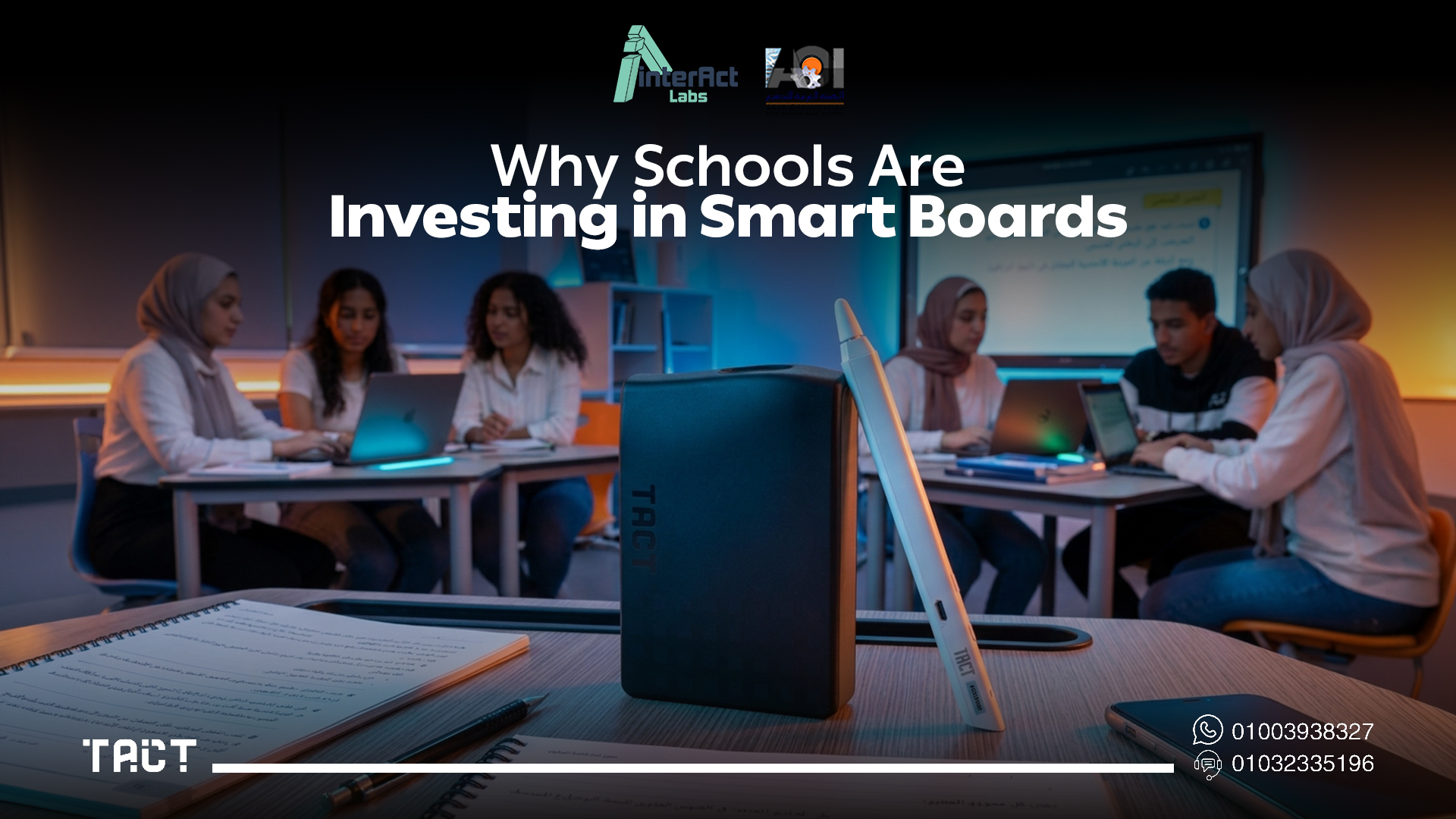
The right solution varies depending on a school's specific context and constraints.
New or expanding schools building classroom infrastructure from the ground up should consider Tact Panel as the integrated solution — purpose-built for institutional use, available in the right sizes for different room configurations, with local support that protects the investment over time.
Established schools with functioning display infrastructure — projectors and large-format TVs that still operate reliably — should evaluate the Tact device approach first. The per-room cost difference is significant, comprehensive deployment is achievable faster, and existing equipment investment is extended rather than written off.
Schools in phased transformation can combine both approaches — Tact devices for classrooms with functioning displays now, Tact Panel for rooms where display infrastructure is being renewed as part of a broader renovation program. This hybrid approach allows consistent interactive capability across the institution while managing capital expenditure across budget cycles.
Private schools in competitive enrollment markets should weight the visibility of classroom technology as part of their institutional brand. Interactive classrooms visible during open days, parent visits, and marketing materials signal educational investment in a tangible, immediately comprehensible way.
Frequently Asked Questions — Smart Board for Schools
Q: What is the most cost-effective way to deploy smart boards across an entire school? For schools with functioning projectors or display screens, the Tact device by Interact Labs provides the lowest per-room cost for interactive capability — allowing comprehensive school-wide deployment within budget cycles that full panel replacement cannot achieve. For rooms requiring new display hardware, Tact Panel provides institutional-grade specification with local support.
Q: How long does teacher adoption typically take? With practical onboarding — a teaching-focused orientation rather than a technical training — most teachers are independently using interactive tools within their first week of access. Adoption accelerates significantly when colleagues can observe each other using the technology effectively.
Q: What happens if a display unit develops a fault during the school year? Interact Labs provides direct technical support within Egypt and the Gulf region, with local spare parts availability and on-site service when required. Resolution timelines are measured in hours rather than the weeks that can result from international brand support routing through regional distributors.
Q: Can the same interactive solution work across different classroom sizes? Yes. Tact Panel is available in multiple sizes for different room configurations. The Tact device works with any compatible display regardless of size — projectors creating large-format displays for lecture halls, or standard classroom TVs for smaller rooms.
Q: Is interactive classroom technology appropriate for all age groups? Yes. The teaching style adjusts, but the technology works across primary, secondary, and university levels. Younger students benefit from visual and interactive engagement; older students benefit from collaborative problem-solving and annotation-based explanation of complex material.
Q: What's the minimum viable deployment for a school to see measurable impact? Deploying in a cluster of classrooms — ideally a full department or year group — creates enough critical mass for peer observation, shared lesson resources, and consistent student experience to generate visible outcomes. Single-room pilots often produce results that don't generalize because the rest of the environment is unchanged.
Final Word: Smart Board for Schools as a Strategic Investment
A smart board for schools is not a classroom accessory. At the institutional level, it's a commitment to the quality and modernity of teaching across the school — a decision that shapes student outcomes, teacher effectiveness, and institutional positioning over years, not months.
The technology choices within that commitment matter. The right solution for each school depends on its existing infrastructure, budget cycle, deployment ambitions, and local support needs. For institutions in Egypt and the Gulf region, Interact Labs provides both the hardware and the support infrastructure to make that commitment sustainable rather than aspirational.
Ready to plan your school's interactive classroom investment? Explore Tact Panel and the Tact device on Interact Labs — and find the right configuration for your institution's vision.


